FEATURED STORIES...
(Click on the images to open in a new tab)







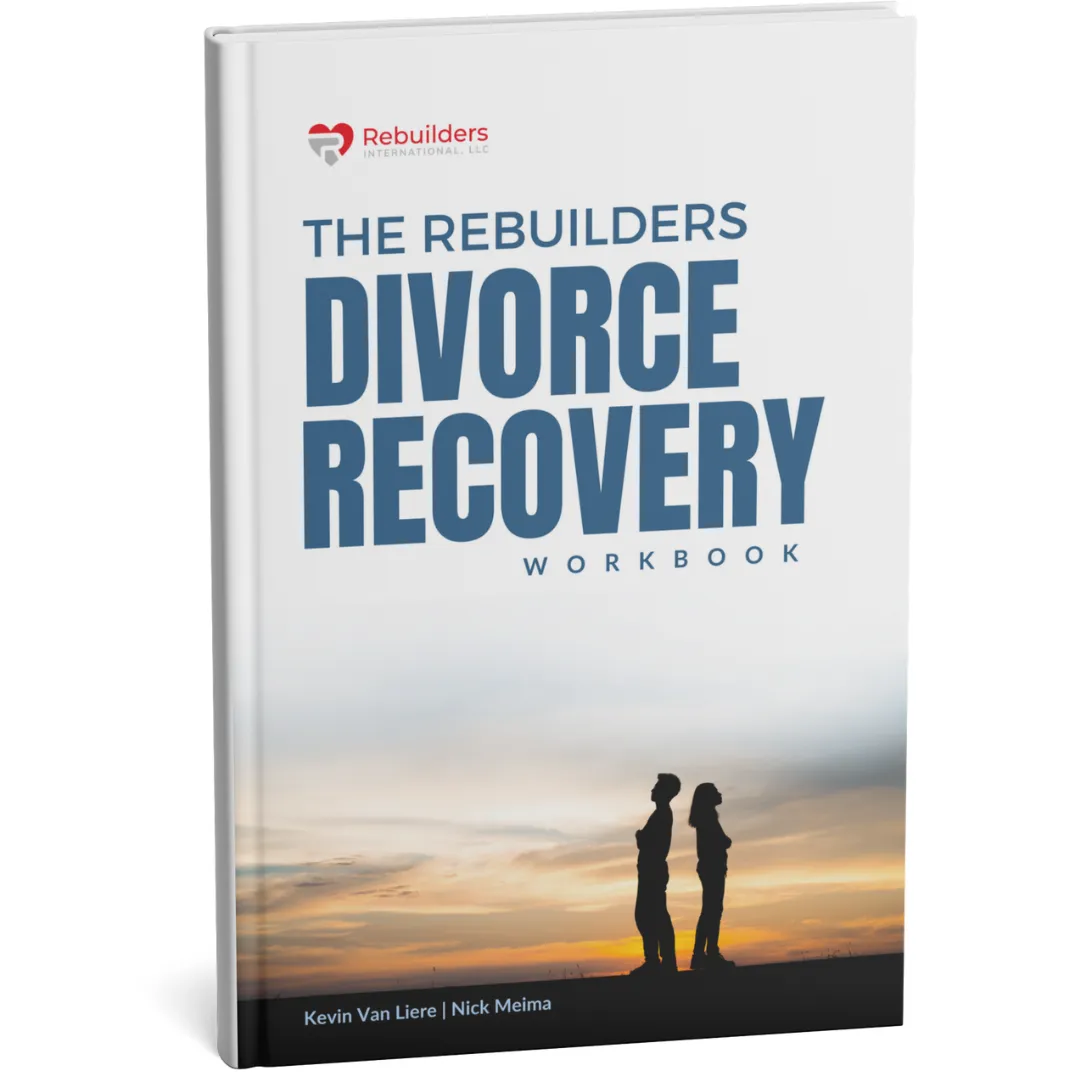


Online Divorce Support Group: How It Works and How to Join
If you're looking for an online divorce support group, you're probably carrying a lot right now. Maybe there's no good group near you, or you don't have the time or energy to drive across town on a weeknight. Maybe you just can't picture walking into a room full of strangers yet.
A well-run online group can give you something your friends and family often can't: a small, welcoming group of people who know exactly what this feels like, and a facilitator who knows what helps. This page explains how our online divorce support group works, what actually happens in a session, what we focus on, and how to try it free for a week.
I went through a divorce recovery group myself after my marriage ended in 2017. I was a single dad running a manufacturing business, and I'm an engineer, so my instinct was to think my way out of it. What helped was sitting with other people who were living the same thing. That experience is why I started Rebuilders International in 2018.
What an online divorce support group is (and isn't)
An online divorce support group is a live video meeting where people dealing with separation or divorce come together with a trained facilitator. You can join from anywhere: your couch, your car in the parking lot at lunch, your kitchen after the kids are asleep.
It's not a forum or a Facebook group. Those can help, but they're often a stream of venting with no one guiding the conversation. It's also not a place to bash your ex. One of our members put it this way:
"We didn't meet at the support group or in class to sit and all collectively bash our exes. We really were doing our own self-discovery and our own inner exploration and learning more about ourselves and about relationships and about emotions." — Susan
That's by design. One of our group guidelines is sharing, not complaining: you talk about how a situation is affecting you, not just what your ex did. It sounds like a small thing. In practice it's what turns a group from a weekly venting session into a place where people actually move forward.
Who our online divorce support group is for
People come at all stages. About 60% of the people we work with are still in the middle of the process, not yet divorced. You're welcome whether you're:
Considering divorce and trying to figure out what's happening to you
Separated or in the middle of it, dealing with lawyers, logistics and kids while your emotions are all over the place
Already divorced and wondering why you still don't feel like yourself
It's also for both sides of a divorce. If you're the one who left, you may be carrying guilt and wondering if you have a right to grieve. If you're the one who was left, you may feel blindsided. Both are real, and both have a place in the group.
What happens in a session
Each weekly session runs about 90 minutes and follows a steady rhythm, so you know what to expect:
Welcome and ground rules. New people are greeted, and the facilitator reviews the guidelines: confidentiality, first names only, no unsolicited advice, and sharing instead of complaining.
A quick check-in. You're asked for a word or two about how you're feeling. "Good" and "fine" don't count. Naming a real feeling (hurt, anxious, numb, hopeful) is harder than it sounds, and it's one of the first skills people build.
Small breakout groups. A few people talk through one or two questions together. This is where a lot of connection happens.
A teaching on one part of divorce recovery. This is what makes our group different from open sharing. Each week covers a specific topic.
Group discussion. People connect the topic to what they're living through.
Closing takeaways. Each person names something they're taking with them into the week.
You can share as much or as little as you want. Listening is participation too.
What we talk about: the RIFT Method
Our teaching is built on the RIFT Method, which breaks divorce recovery into four parts: Thinking, Feelings, Identity and Relationships. The order matters. When a relationship comes apart, it usually goes in the opposite direction: the relationship tears, then you start questioning who you are, then the feelings flood in, and then your thoughts won't stop. Recovery works in reverse, starting with your thinking.
Most people try to do the wrong things in the wrong order. They jump into dating to stop feeling lonely, or try to think their way out of heartbreak. As we like to say, your head can't heal your heart.
Where do most people get stuck? In the feelings. That's why so many of our sessions focus there. A few of the ideas we come back to:
When you numb one feeling, you numb them all. You can't shut off the grief and anger and keep the joy and peace. Getting to the good feelings means moving through the hard ones.
Anger usually sits on top of something else. Underneath it there's often hurt, fear or a need that isn't being met. Feeling intense anger during divorce doesn't make you an angry person. It means you've been hurt.
Feelings point to needs. When you can name what you're feeling, you can start to see what you actually need, instead of waiting for someone else to provide it.
Other weekly topics include codependency, boundaries, letting go, self-compassion, rebuilding trust (including trust in yourself), and understanding what happened in your marriage without drowning in blame.
The group gives you the what: what's happening to you and what's worth working on. Our 10-week divorce recovery class is where you learn the step-by-step how.
Why a group helps when friends and family can't
Friends and family usually mean well. But they often say things like "you're better off" or "just move on," which can leave you feeling more alone. In a group, you're with people who get it without explanation.
"Everyone's story was unique and different, but they're all still feeling the same feelings. They're still feeling the same whiplash of feeling great one day and feeling horrible the next." — Ryan
We think of the support group as a kind of "third place." You have home, and you have work. Divorce often costs people the third place, the friends, couples, church or community they shared with their spouse. For a while, the group can fill that gap. A lot of people come for information and stay for the connection.
"It was so interesting to come in and just kind of be uncertain and feel like, do I belong here? Are these my people? And just really, really quickly feel a bond with everybody." — Kerri
Why online works (even if you're nervous about groups)
No local group near you. Many areas don't have a good divorce group, or have none at all. Online, location doesn't matter. One member joined from another country: "If it was only in person, I wouldn't have been able to attend it." — Andrew
It fits around your life. No commute, no extra childcare for the drive, and you can join after the kids are in bed.
You can show up as you are. On some nights, the best you can do is join from the couch under a blanket. That's fine.
It can feel safer. Some people who dread groups find online easier.
"I have such social anxiety around groups. So it's good because it helps me deal with that a little bit. In a way that feels safe. And everybody's talking about divorce, so nobody's calling me out really on my social awkwardness." — Laurel
Time alone doesn't heal
One of the most common things we hear is "I figured time would take care of it." Time helps, but on its own it mostly scabs over the wound. The work is what heals it. Our motto is: when you take the time it takes, it takes less time.
"I don't believe time heals wounds. I think you have to actually work towards it." — Andrew
We also measure recovery, which is unusual in this field. Our free Divorce Recovery Self-Test works like an emotional weather report, showing where you are in each part of RIFT. More than 12,000 people have taken it since 2018. When we look at people who retook it, those who didn't do a program had about a 1 in 3 chance of getting worse, while the program participants who retook it improved.
Support group or recovery program?
A support group gives you community, perspective and a weekly place to land. A recovery program goes deeper, with a structured process over several weeks. They work well together: many people start in the support group and move into the 10-week class when they're ready, and plenty keep coming to the group during and after.
Rebuilders is built on 50+ years of divorce recovery work. If you'd like to compare options, our complete guide to divorce support groups covers online and local groups and the differences between them, and this guide covers how to find online groups with trained leaders.
How to join
Your first week is free. Join the online support group free for a week.
Already decided? Save your seat for the next session.
Prefer in person? See if there's a Rebuilders program near you.
Frequently asked questions
Are online divorce support groups free?
Some are free and some charge a fee. Our weekly online support group is free for your first week, so you can see if it's a fit before deciding anything.
Do I have to be divorced to join a divorce support group?
No. Most of the people we work with are still in the process. You're welcome if you're considering divorce, separated, in the middle of it, or divorced.
Do I have to talk in an online support group?
No. You can listen until you're ready. As one member said, "lots of times, whatever you're thinking somebody else probably is too." Hearing someone else say it out loud can help on its own.
Will people just complain about their exes?
That's what our guidelines are for. The focus is on how things are affecting you and what you're learning about yourself, not on what your ex did. Facilitators keep the conversation there.
Is my information kept private?
Groups use first names only, and what's shared in the group stays in the group. You decide how much to share.
Is an online group as good as an in-person group?
For many people, yes. What matters most is a trained facilitator, a group focused on divorce, and a structure that teaches something each week. If you prefer in person, check for a local Rebuilders program.
Take the first step
You don't have to figure this out alone. Join our online divorce support group free for a week, or start with the free Divorce Recovery Self-Test to see where you are in your recovery.

Divorce Support & Recovery
Welcome to the #1 most comprehensive divorce recovery program in the world.

Does the Rebuilders
System Really Work?
Below you’ll see that the Rebuilders International system really works, why it is unique, and what we do. We will let this information stand for itself! And yes, of course results will vary but with only a few hours a week you can have a life changing experience.
The Rebuilders Background:
40 Years Of Changing People's Lives.
Meet Dr. Bruce Fisher
The founder of the Rebuilders program was Dr. Bruce Fisher (1931-1998). He was born in Iowa but spent most of his adult life in Boulder, Colorado. He was a popular divorce therapist, author, teach and a Clinical Member of the American Association for Marriage and Family Therapy. As he worked with clients dealing with divorce he realized that traditional therapy didn’t work efficiently.
He began working with his clients in groups and eventually found that there are 19 “steps” that people must work through to effectively “Rebuild” their lives. From this work he wrote the book “Rebuilding When Your Relationship Ends.” We still use this book as a reference in our classes. Since he wrote the book over 30 years ago we have learned a lot and the program has evolved considerably. Now we find that there are more “steps” and that there are some elements that Dr. Fisher wasn’t aware of or misunderstood. However, he still created a powerful foundation for the program that we run today.

See The Data...
"I’m so thankful to have had the opportunity to have taken this journey with you and the class. It’s been very mind blowing and a real eye opener. It changed my life."
Mike
How our program works...

Head
Your thinking, mindset, beliefs, and values all influence how you respond to the traumatic experience of divorce. We show you how to step outside of the rumination about the past. Learn to step outside of the normal traps that keep people stuck thinking about the past.

Heart
Many people suppress, depress, or repress their feelings. Divorce brings so many “difficult” feelings. We give you tools to work through them, use them, and feel the “good” feelings again -like HAPPINESS, JOY, AND LOVE.

Identity
In marriages people “lose” themselves. When the marriage ends they don’t know who they are as a single person. We help you connect with yourself so that you can be comfortable being alone in your own skin.
The Program Works Regardless of Your Situation!
Considering Divorce?

Learn what you can do find the best path forward
It is a very difficult time in your life when you are facing the possibility of divorce. We offer a wide variety of tools, information and personal coaching to help you.
In the Divorce Process?
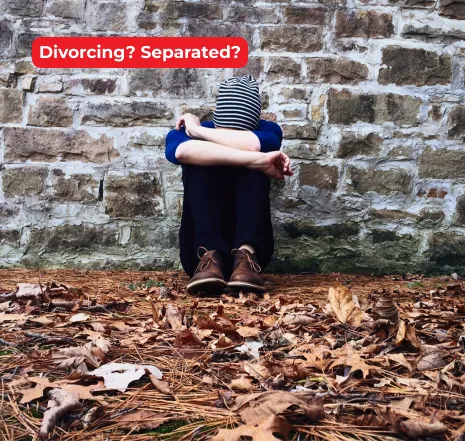
Divorce Resources – Support for All Stages of Divorce
When you are dealing with divorce there is a lot going on. There are legal issues, financial issues, emotional issues, parenting issues and more. When faced with all of these pressures we see that people that pay attention to the emotional effect of divorce are better able to navigate everything else much better.
Divorced?

The Papers are signed...
Whether you are recently divorced or it has been years, the wounds from divorce are real. Time does not heal all wounds, it just scabs over them. So if you are ready to learn more about what you can do to HEAL then click below.
Get guidance on how to best recover during this very challenging time in your life.
PAGE HEADLINE (ALL CAPS, BOLD) - PRIMARY COLORS (USE FIRST) & LINK COLOR
RB Logo Red #EC1C24
RB Grey #8D918B
RB Blue #1E3888
RB Dark Blue #172B68
RB Yellow #F5E663
RB Red #B51730
SUB-PAGE HEADLINE (32M, 50D) (ALL CAPS, BOLD) - PRIMARY COLORS (USE FIRST) & LINK COLOR
Sub-Title (22M, 35D) (BOLD) - Primary Colors (Underline) & LINK COLOR
Shades of Grey on RB Grey
RB Grey 1 (F2F3F2) - RB Grey 1 BOLD (F2F3F2)
RB Grey 2 (D8DAD8) - RB Grey 1 BOLD (D8DAD8)
RB Grey 3 (BFC1BE) - RB Grey 1 BOLD (BFC1BE)
RB Grey 4 (A5A8A3) - RB Grey 1 BOLD (A5A8A3)
RB Grey 5 (8B8F89) - RB Grey 1 BOLD (8B8F89)
RB Grey 6 (727670) - RB Grey 1 BOLD (727670)
RB Grey 7 (585C57) - RB Grey 1 BOLD (585C57)
RB Grey 8 (3F413E) - RB Grey 1 BOLD (3F413E)
RB Grey 9 (262725) - RB Grey 1 BOLD 262725
RB Grey 10 (0D0D0C) - RB Grey 1 BOLD 0D0D0C
Shades of Grey on White
RB Grey 1 (F2F3F2) - RB Grey 1 BOLD (F2F3F2)
RB Grey 2 (D8DAD8) - RB Grey 1 BOLD (D8DAD8)
RB Grey 3 (BFC1BE) - RB Grey 1 BOLD (BFC1BE)
RB Grey 4 (A5A8A3) - RB Grey 1 BOLD (A5A8A3)
RB Grey 5 (8B8F89) - RB Grey 1 BOLD (BFC1BE)
RB Grey 6 (727670) - RB Grey 1 BOLD (BFC1BE)
RB Grey 7 (585C57) - RB Grey 1 BOLD (BFC1BE)
RB Grey 8 (3F413E) - RB Grey 1 BOLD (BFC1BE)
RB Grey 9 (262725) - RB Grey 1 BOLD (BFC1BE)
RB Grey 10 (0D0D0C) - RB Grey 1 BOLD (BFC1BE)
Shades of Blue on RB Grey
RB Blue 1 (EAEEFA) - RB Blue 1 BOLD (EAEEFA)
RB Blue 2 (COCCF1) - RB Blue 2 BOLD (COCCF1)
RB Blue 3 (97ABE8) - RB Blue 3 BOLD (97ABE8)
RB Blue 4 (6D89DF) - RB Blue 4 BOLD (6D89DF)
RB Blue 5 (4367D6) - RB Blue 5 BOLD (4367D6)
RB Blue 6 (294DBC) - RB Blue 6 BOLD (294DBC)
RB Blue 7 (203C92) - RB Blue 7 BOLD (203C92)
RB Blue 8 (172B68) - RB Blue 8 BOLD (172B68)
RB Blue 9 (0E1A3F) - RB Blue 9 BOLD (0E1A3F)
RB Blue 10 (050915) - RB Blue 10 BOLD (050915)
Shades of Blue on White
RB Blue 1 (EAEEFA) - RB Blue 1 BOLD (EAEEFA)
RB Blue 2 (COCCF1) - RB Blue 2 BOLD (COCCF1)
RB Blue 3 (97ABE8) - RB Blue 3 BOLD (97ABE8)
RB Blue 4 (6D89DF) - RB Blue 4 BOLD (6D89DF)
RB Blue 5 (4367D6) - RB Blue 5 BOLD (4367D6)
RB Blue 6 (294DBC) - RB Blue 6 BOLD (294DBC)
RB Blue 7 (203C92) - RB Blue 7 BOLD (203C92)
RB Blue 8 (172B68) - RB Blue 8 BOLD (172B68)
RB Blue 9 (0E1A3F) - RB Blue 9 BOLD (0E1A3F)
RB Blue 10 (050915) - RB Blue 10 BOLD (050915)
Shades of Yellow on RB Grey
RB Yellow 1 (FDFBE7) - RB Yellow 1 BOLD (FDFBE7)
RB Yellow 2 (FAF3B7) - RB Yellow 2 BOLD (FAF3B7)
RB Yellow 3 (F7EC87) - RB Yellow 3 BOLD (F7EC87)
RB Yellow 4 (F4EF57) - RB Yellow 4 BOLD (F4EF57)
RB Yellow 5 (F1DC27) - RB Yellow 5 BOLD (F1DC27)
RB Yellow 6 (D8C3OE) - RB Yellow 6 BOLD (D8C3OE)
Shades of Yellow on White
RB Yellow 1 (FDFBE7) - RB Yellow 1 BOLD (FDFBE7)
RB Yellow 2 (FAF3B7) - RB Yellow 2 BOLD (FAF3B7)
RB Yellow 3 (F7EC87) - RB Yellow 3 BOLD (F7EC87)
RB Yellow 4 (F4EF57) - RB Yellow 4 BOLD (F4EF57)
RB Yellow 5 (F1DC27) - RB Yellow 5 BOLD (F1DC27)
RB Yellow 6 (D8C3OE) - RB Yellow 6 BOLD (D8C3OE)

Copyright © 2026 Rebuilders International, LLC, All rights reserved.