FEATURED STORIES...
(Click on the images to open in a new tab)









How to Release Anger After Divorce (Without Forgiving)
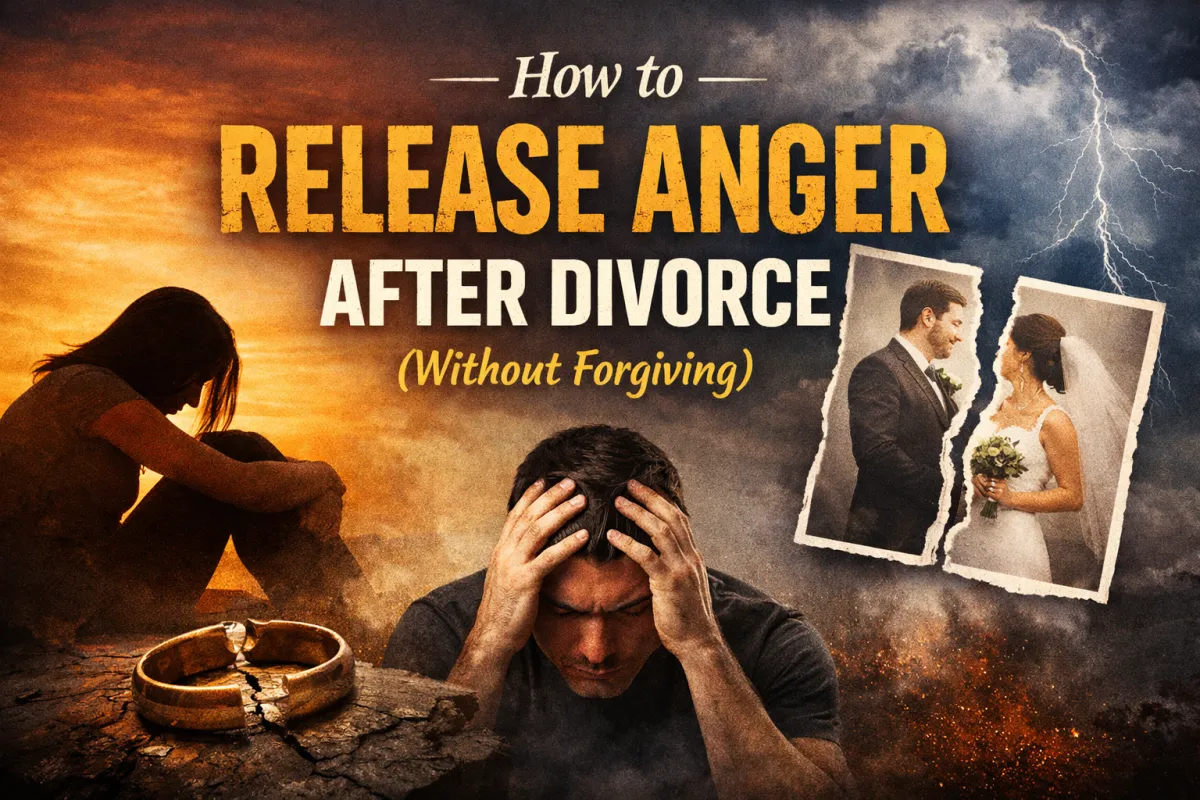
How to Release Anger After Divorce (Without Forgiving)
Anger after divorce can feel like proof that what happened mattered.
And honestly—sometimes it is totally justified.
But here’s the problem: having a good reason doesn’t make anger disappear. And if it stays stuck inside you long enough, it doesn’t just “fade with time.” It starts leaking into everything—your sleep, your health, your focus, your relationships, and your parenting.
A lot of people have heard some version of this line:
“Holding onto anger is like drinking poison and expecting the other person to die.”
It’s a powerful idea (and it’s widely repeated with different attributions). (Fake Buddha Quotes)
Whether you love that quote or hate it, the point is real: unreleased anger hurts the person carrying it.
1) Why divorce anger happens: it’s a “safety violation”
In relationships, there’s a core question running in the background:
“Am I safe with you?”
When betrayal hits—an affair, deception, abandonment, disrespect, manipulation—your system registers it as a threat. That’s why anger can show up so fast and feel so intense.
Anger isn’t “random.” In this model, it’s protective energy after a safety violation.
And that’s important, because when you understand what anger is for, it becomes something you can work with—rather than something you’re ashamed of.
2) Most anger starts as a thought, not a behavior
A lot of people assume anger is just “how they act.”
But for most people, it begins earlier than that.
It starts as a thought like:
“I don’t matter.”
“I was deceived.”
“Was it all built on a lie?”
Those thoughts hit the nervous system like a threat.
Then anger shows up to protect you.
This is why you can’t simply “logic your way out of it.” Your body is responding to what it believes is dangerous.
3) Anger is often the “top emotion” — what’s underneath matters
Anger is frequently the most visible emotion. It’s the one you can feel in your chest, your jaw, your hands.
But anger is often protecting a deeper layer—feelings we don’t like to feel, such as:
hurt
fear
shame
grief
confusion
anxiety
So one of the best questions you can ask when anger is rising is:
“What is this protecting?”
“If I wasn’t angry, what would I feel?”
This isn’t about making anger “wrong.” It’s about getting accurate—because accuracy is what helps you move forward.
4) Unprocessed anger isn’t harmless — it goes outward or inward
Anger is energy.
If it doesn’t move through you, it tends to move into your life.
In the divorce world, a pattern shows up again and again:
Option A: It goes outward
That can look like:
passive anger
picking fights
revenge behavior
making the other person’s life harder
yelling, breaking things, escalating conflict
Option B: It goes inward
This is where people often get blindsided.
When anger gets trapped inside, it can harden into:
resentment
numbness
shutdown
depression (often anger with nowhere to go)
(If you’ve ever thought, “I’m not even angry anymore… I’m just tired,” that’s worth paying attention to.)
5) Resentment isn’t a personality trait — it’s anger + time
Resentment doesn’t usually appear overnight.
A simple way to say it:
Resentment is unexpressed anger plus time.
That’s why “waiting for it to dissipate” usually isn’t a strategy. It often turns into avoidance, and avoidance builds pressure.
So the goal isn’t “manage it forever.”
The goal is release—so it doesn’t calcify into something that runs your life.
6) Current anger vs. past (stored) anger: don’t mix these up
This is a huge distinction:
Current anger
This is anger about what’s happening now:
texts
custody conflict
court
finances
disrespect
ongoing problems
Current anger often needs boundaries.
Past anger (stored anger)
Divorce often activates older pain:
old abandonment
old shame
powerlessness
old betrayals
Past anger needs processing.
When people mix these up, they stay stuck.
Why? Because they try to “process” what actually needs a boundary, or they try to “boundary” what actually needs emotional release.
7) Grief and anger are often “joined at the hip”
In divorce recovery, grief and anger often travel together.
Sometimes grief triggers anger. Sometimes anger triggers more grief.
This is one reason people can feel like they’re “going in circles.”
And it’s also why—after decades of working with people—this process tends to go better when grief work and anger work are handled clearly (instead of trying to force both at the same time).
8) Releasing anger is not the same thing as forgiving
This is where a lot of people get stuck:
They don’t want to let go of anger because it feels like letting the other person “off the hook.”
But here’s the reframe:
Releasing anger isn’t forgiveness. It’s removing poison from your own system.
You can still have standards.
You can still have boundaries.
You can still tell the truth about what happened.
Releasing anger is simply refusing to let it keep costing you.
If you want a single line to remember:
The goal isn’t to be nice. The goal is to be free.
9) If you have kids: anger control isn’t optional
If you’re co-parenting, anger has extra consequences.
Kids don’t need you to be perfect—but they do need you to be regulated.
Using children to get back at the other parent (or leaning on them emotionally) doesn’t just “blow off steam.” It puts them in the middle.
And kids fundamentally want to love both parents. (Many co-parenting resources emphasize how conflict and hostile co-parenting dynamics can harm kids’ emotional safety.) (OurFamilyWizard)
So if you’re thinking, “I can live with my anger,” the hard truth is: your kids can’t.
Regulation is one of the most protective gifts you can give them during divorce.
10) A simple next step: measure what you’re dealing with
One reason people stay stuck is they’re guessing.
They don’t know if they’re “a little angry” or living with a level of anger that’s wrecking their body and brain.
That’s why measurement helps: it turns a foggy emotional experience into something you can actually work with.
Next steps (choose one):
Take the self-test to get a baseline of where you are right now (including anger).
Or watch the full video episode if you want the complete model and the full teaching.
(Place your links here)
Self-Test: https://rebuilders.net/self-test
Full video episode:
FAQ
How long does anger last after divorce?
There’s no single timeline. Anger tends to last longer when it’s being avoided, suppressed, or constantly re-triggered by ongoing conflict. The more you learn to process and release it, the less it controls your day-to-day.
Is it bad to feel angry after divorce?
No. Anger is common and often understandable. The issue isn’t the emotion—it’s what happens when anger stays trapped in your system and starts shaping your health, your decisions, and your relationships.
Do I have to forgive to heal?
No. Forgiveness and emotional release aren’t the same thing. You can release anger for your own freedom without excusing what happened or reconciling.
What if my ex keeps triggering me?
Then you likely need two tracks: boundaries for current triggers, and processing for stored anger that makes you reactive. Mixing those up is a big reason people stay stuck.

Divorce Support & Recovery
Welcome to the #1 most comprehensive divorce recovery program in the world.

Does the Rebuilders
System Really Work?
Below you’ll see that the Rebuilders International system really works, why it is unique, and what we do. We will let this information stand for itself! And yes, of course results will vary but with only a few hours a week you can have a life changing experience.
The Rebuilders Background:
40 Years Of Changing People's Lives.
Meet Dr. Bruce Fisher
The founder of the Rebuilders program was Dr. Bruce Fisher (1931-1998). He was born in Iowa but spent most of his adult life in Boulder, Colorado. He was a popular divorce therapist, author, teach and a Clinical Member of the American Association for Marriage and Family Therapy. As he worked with clients dealing with divorce he realized that traditional therapy didn’t work efficiently.
He began working with his clients in groups and eventually found that there are 19 “steps” that people must work through to effectively “Rebuild” their lives. From this work he wrote the book “Rebuilding When Your Relationship Ends.” We still use this book as a reference in our classes. Since he wrote the book over 30 years ago we have learned a lot and the program has evolved considerably. Now we find that there are more “steps” and that there are some elements that Dr. Fisher wasn’t aware of or misunderstood. However, he still created a powerful foundation for the program that we run today.

See The Data...
"I’m so thankful to have had the opportunity to have taken this journey with you and the class. It’s been very mind blowing and a real eye opener. It changed my life."
Mike
How our program works...

Head
Your thinking, mindset, beliefs, and values all influence how you respond to the traumatic experience of divorce. We show you how to step outside of the rumination about the past. Learn to step outside of the normal traps that keep people stuck thinking about the past.

Heart
Many people suppress, depress, or repress their feelings. Divorce brings so many “difficult” feelings. We give you tools to work through them, use them, and feel the “good” feelings again -like HAPPINESS, JOY, AND LOVE.

Identity
In marriages people “lose” themselves. When the marriage ends they don’t know who they are as a single person. We help you connect with yourself so that you can be comfortable being alone in your own skin.
The Program Works Regardless of Your Situation!
Considering Divorce?

Learn what you can do find the best path forward
It is a very difficult time in your life when you are facing the possibility of divorce. We offer a wide variety of tools, information and personal coaching to help you.
In the Divorce Process?
Divorce Resources – Support for All Stages of Divorce
When you are dealing with divorce there is a lot going on. There are legal issues, financial issues, emotional issues, parenting issues and more. When faced with all of these pressures we see that people that pay attention to the emotional effect of divorce are better able to navigate everything else much better.
Divorced?

The Papers are signed...
Whether you are recently divorced or it has been years, the wounds from divorce are real. Time does not heal all wounds, it just scabs over them. So if you are ready to learn more about what you can do to HEAL then click below.
Get guidance on how to best recover during this very challenging time in your life.
PAGE HEADLINE (ALL CAPS, BOLD) - PRIMARY COLORS (USE FIRST) & LINK COLOR
RB Logo Red #EC1C24
RB Grey #8D918B
RB Blue #1E3888
RB Dark Blue #172B68
RB Yellow #F5E663
RB Red #B51730
SUB-PAGE HEADLINE (32M, 50D) (ALL CAPS, BOLD) - PRIMARY COLORS (USE FIRST) & LINK COLOR
Sub-Title (22M, 35D) (BOLD) - Primary Colors (Underline) & LINK COLOR
Shades of Grey on RB Grey
RB Grey 1 (F2F3F2) - RB Grey 1 BOLD (F2F3F2)
RB Grey 2 (D8DAD8) - RB Grey 1 BOLD (D8DAD8)
RB Grey 3 (BFC1BE) - RB Grey 1 BOLD (BFC1BE)
RB Grey 4 (A5A8A3) - RB Grey 1 BOLD (A5A8A3)
RB Grey 5 (8B8F89) - RB Grey 1 BOLD (8B8F89)
RB Grey 6 (727670) - RB Grey 1 BOLD (727670)
RB Grey 7 (585C57) - RB Grey 1 BOLD (585C57)
RB Grey 8 (3F413E) - RB Grey 1 BOLD (3F413E)
RB Grey 9 (262725) - RB Grey 1 BOLD 262725
RB Grey 10 (0D0D0C) - RB Grey 1 BOLD 0D0D0C
Shades of Grey on White
RB Grey 1 (F2F3F2) - RB Grey 1 BOLD (F2F3F2)
RB Grey 2 (D8DAD8) - RB Grey 1 BOLD (D8DAD8)
RB Grey 3 (BFC1BE) - RB Grey 1 BOLD (BFC1BE)
RB Grey 4 (A5A8A3) - RB Grey 1 BOLD (A5A8A3)
RB Grey 5 (8B8F89) - RB Grey 1 BOLD (BFC1BE)
RB Grey 6 (727670) - RB Grey 1 BOLD (BFC1BE)
RB Grey 7 (585C57) - RB Grey 1 BOLD (BFC1BE)
RB Grey 8 (3F413E) - RB Grey 1 BOLD (BFC1BE)
RB Grey 9 (262725) - RB Grey 1 BOLD (BFC1BE)
RB Grey 10 (0D0D0C) - RB Grey 1 BOLD (BFC1BE)
Shades of Blue on RB Grey
RB Blue 1 (EAEEFA) - RB Blue 1 BOLD (EAEEFA)
RB Blue 2 (COCCF1) - RB Blue 2 BOLD (COCCF1)
RB Blue 3 (97ABE8) - RB Blue 3 BOLD (97ABE8)
RB Blue 4 (6D89DF) - RB Blue 4 BOLD (6D89DF)
RB Blue 5 (4367D6) - RB Blue 5 BOLD (4367D6)
RB Blue 6 (294DBC) - RB Blue 6 BOLD (294DBC)
RB Blue 7 (203C92) - RB Blue 7 BOLD (203C92)
RB Blue 8 (172B68) - RB Blue 8 BOLD (172B68)
RB Blue 9 (0E1A3F) - RB Blue 9 BOLD (0E1A3F)
RB Blue 10 (050915) - RB Blue 10 BOLD (050915)
Shades of Blue on White
RB Blue 1 (EAEEFA) - RB Blue 1 BOLD (EAEEFA)
RB Blue 2 (COCCF1) - RB Blue 2 BOLD (COCCF1)
RB Blue 3 (97ABE8) - RB Blue 3 BOLD (97ABE8)
RB Blue 4 (6D89DF) - RB Blue 4 BOLD (6D89DF)
RB Blue 5 (4367D6) - RB Blue 5 BOLD (4367D6)
RB Blue 6 (294DBC) - RB Blue 6 BOLD (294DBC)
RB Blue 7 (203C92) - RB Blue 7 BOLD (203C92)
RB Blue 8 (172B68) - RB Blue 8 BOLD (172B68)
RB Blue 9 (0E1A3F) - RB Blue 9 BOLD (0E1A3F)
RB Blue 10 (050915) - RB Blue 10 BOLD (050915)
Shades of Yellow on RB Grey
RB Yellow 1 (FDFBE7) - RB Yellow 1 BOLD (FDFBE7)
RB Yellow 2 (FAF3B7) - RB Yellow 2 BOLD (FAF3B7)
RB Yellow 3 (F7EC87) - RB Yellow 3 BOLD (F7EC87)
RB Yellow 4 (F4EF57) - RB Yellow 4 BOLD (F4EF57)
RB Yellow 5 (F1DC27) - RB Yellow 5 BOLD (F1DC27)
RB Yellow 6 (D8C3OE) - RB Yellow 6 BOLD (D8C3OE)
Shades of Yellow on White
RB Yellow 1 (FDFBE7) - RB Yellow 1 BOLD (FDFBE7)
RB Yellow 2 (FAF3B7) - RB Yellow 2 BOLD (FAF3B7)
RB Yellow 3 (F7EC87) - RB Yellow 3 BOLD (F7EC87)
RB Yellow 4 (F4EF57) - RB Yellow 4 BOLD (F4EF57)
RB Yellow 5 (F1DC27) - RB Yellow 5 BOLD (F1DC27)
RB Yellow 6 (D8C3OE) - RB Yellow 6 BOLD (D8C3OE)

Copyright © 2026 Rebuilders International, LLC, All rights reserved.